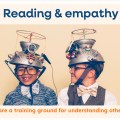
a rigorous and critical empathy

As an exercise, consider that the other person is one’s empathy trainer. The other individual calls forth one’s empathy. If the Other behaves in a challenging way, the challenge is to one’s empathy. If the other person is in an… Read More ›

Hard empathy is different than “Empathy is Hard”

The distinction between Hard Empathy and Soft Empathy needs to be better known. Soft empathy does not work with bullies, psychopaths, and the criminally insane; which are difficult individuals where Hard Empathy can make a difference. The innovation proposed here is to think of empathy, like so many things these days, as existing on a spectrum between empathy as “empathic listening” and empathy as “tough love.” A rigorous and critical empathy includes both options, which map to the difference between “soft empathy” and “hard empathy,” and a sliding scale of possibilities in-between.

Top Trends in Empathy for 2026

The trend of bringing large language models to empathy and empathic relatedness is a game changer. The question is not whether the generative AI can be empathic, but the extent to which the designers are able to distinguish responsiveness from “stroking one’s ego,” sycophancy (servile flattery), and the extent to which prospective clients decide to engage (both open questions at this date (Q1 2026)). 

A concise talk on trauma and radical empathy

Caruth (1996) concisely defines trauma in terms of an experience that is registered but not experienced, a truth or reality that is not available to the survivor as a standard experience. The person (for example) was factually, objectively present when the head on collision occurred, but, even if the person has memories, and would acknowledge the event, paradoxically, the person does not presently experience it as something the person experienced in a way that a person standardly experienced the past event. The survivor experiences dissociated, repetitive nightmares, flashbacks, and depersonalization. 

Noted in passing: Anna Ornstein (1927-2025)

To enhance the parents’ therapeutic potentials does not mean to give recommendations as to how to interrupt or actively discourage the child’s disturbing behavior. Particularly destructive are recommendations which ask for changed parental behavior without an appreciation for the parents’ difficulty to comply; such recommendations are “grafted” onto the parents’ pathology.

The empathic dozen: Top 12 empathy lessons

Drive out aggression, hostility, bullying, prejudice of all kinds, dignity violations, hypocrisy, making excuses, finger pointing, cynicism, resignation, bad language, manipulation, injuries to self-esteem, competing to be the biggest victim, and politics in the pejorative sense of the term, and empathy naturally comes forth.

Radical empathy is now a podcast

This episode on Radical Empathy – what it is and why it is important – is the first in a series inquiring into radical empathy, what it is or whether it is just a rumor; how radical empathy differs from standard empathy; how radical empathy and everyday, standard empathy overlap and the dynamics of their interactions; how radical empathy makes a difference in situations when standard empathy breaks down and fails; and how the listener can expand his or her empathic skills, getting power over empathy and apply empathy in one’s lie, relationships, career, family, in the individual and in community.