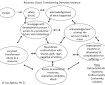
Connecting the dots: stress and inflammation Chronic inflammation is associated with auto-immune disorders such as asthma, irritable bowel syndrome (IBS), metabolic disorders, and allergies with which many people struggle, thereby finding their vitality reduced. People sometimes respond to these disorders by… Read More ›
The trend of bringing large language models to empathy and empathic relatedness is a game changer. The question is not whether the generative AI can be empathic, but the extent to which the designers are able to distinguish responsiveness from “stroking one’s ego,” sycophancy (servile flattery), and the extent to which prospective clients decide to engage (both open questions at this date (Q1 2026)).
Drive out aggression, hostility, bullying, prejudice of all kinds, dignity violations, hypocrisy, making excuses, finger pointing, cynicism, resignation, bad language, manipulation, injuries to self-esteem, competing to be the biggest victim, and politics in the pejorative sense of the term, and empathy naturally comes forth.
Radical empathy is the number one trend. The world is a more dangerous, broken place than it was a year ago. The challenge to empathy is that the dangers and breakdowns in the world have expanded dramatically over the long past year such. Standard empathy is no longer sufficient. Radical empathy is required.
Expanded power over pain is a significant result that may usefully be embraced by all human beings who experience pain – which describes just about everyone at some time or another. Acute pain communicates an urgent need for intervention; chronic pain is demoralizing and potentially life changing.
Empathy is oxygen for the soul (see Chapter 6: Evidence-based empathy training). So, if you are short of breath due to life stress, get the expanded empathy delivered in this book. Just as the body needs oxygen to live physically, the soul needs empathy to live emotionally.
Forced to make a decision that no one should have to make; that no one can (really) make; and yet that she did make. This survivor is also a now a perpetrator. Moral trauma.
At first, empathy and rhetoric seem to be at cross purposes – yet the speaker without empathy is not likely to be effective or persuasive, no matter how much we may disagree
De Botton is absolutely on point in asserting that neither sex nor love should require us to lie in order to get them. Definitely tell the truth – including to yourself. Yet the way sex and love (affection) fall apart is concerning. How does when bring them together? See http://www.EmpathyLessons.com
Left standing when the music stops: The shortage of available talk therapists and what to do about it: Read complete post: http://www.Louagosta.com [lower right, below the vidoes]
Empathy is one of those things that are hard to delegate. This role shows up like another job responsibility with which the CEO of the organization is tasked—along with everything else that she already has to do. As if she did not already have enough alligators snapping at various parts of her anatomy, one has to be nice about it, too? But of course empathy is not niceness, though it is not about being un-nice. It is about knowing what others are experiencing, because one has a vicarious experience and then processing that further to expand boundaries and exercise leadership.
Since the bullying is a boundary violation, the way to reestablish empathy and order (where “order” means common courtesy) is to reestablish the boundary between persons.
Cross the street away from the neighbor to “down regulate” your empathy, and experience less empathic distress; and cross the street towards your neighbor to expand your empathy in the direction of creating an inclusive community of persons, who recognize the value of cooperation.
It is a high probability you are dealing with a True Believer when, in the face of a setback to the Belief System (whether religion, political party, social movement, or spiritual cause) the adherent to the cause Doubles Down. Key term: double down.
Arnold I. Goldberg, MD (1929-2020) was an innovator in psychoanalysis and self psychology, a prolific author (really prolific!), an inspiring educator, and simply a wonderful human being.
A rumor of empathy learns about a report of an alleged example of empathy in the work, actions, or conversation of a person or organization. I then reach out to the person and talk to them in detail about the work they are doing to confirm or disconfirm the validity of the rumor.
Empathy flourishes in a space of acceptance and tolerance. But acceptance and tolerance have their dark side, too. People can be intolerant and unaccepting. Be accepting of what? Be accepting of intolerance? Be tolerant of intolerance? Yes, be tolerant, but… Read More ›
Freud is explicit about his commitment to empathy. He writes and publishes the following: It is certainly possible to forfeit this first success [in therapy] if one takes up any standpoint other than one of empathy such as moralizing (“Further… Read More ›
Empathy: A Lazy Person’s Guide is a light-hearted look at a significant and engaging matter: how to expand empathy in the individual and the community – and do so without working too hard. The Guide includes twenty eight illustrations by… Read More ›
Jamieson Webster writes like a combination of an Exocet missile and a feline feather tease. Webster has previously published on The Life and Death of Psychoanalysis (2012) and with Simon Critchley on Hamlet (Stay Illusion! The Hamlet Doctrine (2014)). Her latest… Read More ›
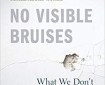
The title of Rachel Louise Snyder’s eye-opening, powerful, page-turner of a book, No Visible Bruises, refers to strangulation [No Visible Bruises: What We Don’t Know About Domestic Violence Can Kill Us, New York: Bloomsbury Publishing, 2019: 309 pp, $28(US)]. Some… Read More ›
The first empathy book reviewed here is very good indeed. William Miller’s Listening Well: The Art of Empathic Understanding (Wipf and Stock, 114pp, ($18US)) is a short book. Admirably concise. My short review is that, as I am author of… Read More ›
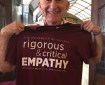
You don’t need a philosopher to tell you what empathy is; you need a philosopher to help you distinguish the hype and the over-intellectualization from a rigorous and critical empathy. Every parent, teacher, health care worker, business person with customers,… Read More ›
In the webcast the participants will engage how to:
• Distinguish empathy from compassion, forgiveness, pity, and “niceness”;
• Establish and maintain boundaries with bullies, slackers, difficult individuals, and friends while still honoring one’s commitment to empathy, to client service, to flourishing financially, to inclusiveness and community;
• Identify failures (breakdowns) in empathy and what to do about it; and
• Expand or contract empathy on demand by overcoming obstacles to empathy.
Here are twelve (12) top radio shows on empathy. Lou Agosta interviews thought leaders in the community about work they are doing that expands empathy. Note: interviews are edited to delete the commercials. Biographical information about the speaker and interviewer… Read More ›
The neurochemical reshaping of personality has had many unanticipated consequences. I acknowledge that the debate is not ended by the Chapter in my A Rumor of Empathy on “Plato Not Prozac,” the name of which is hereby acknowledged to be from… Read More ›
If the survivor can feel safe enough to express what happened into an empathic receptivity in the context of a trusting environment that does not retraumatize by skepticism and cross-examination, then the abuse, the boundary violations, and the perpetrations, begin… Read More ›
Join me [Lou] for an on the air conversation on Empathy Radio focusing on top tips and techniques for expanding ones empathy. Click here to play the show: 10 Top Tips and Techniques for Expanding Empathy. The main tip and… Read More ›
Join Lou Agosta and his special guests Drs. Jesse Viner and Dale Monroe-Cook for an engaging conversation about the emotional, psychological, and human challenges of emerging adulthood. Drs. Viner and Monroe-Cook address these issues with their clients as Medical director and… Read More ›
Three women a day die as the result of domestic violence [DV] (nnedv.org). Join me for an “on the air” conversation with Radhika Sharma, education coordinator at Apha Ghar (Our Home, ApnaGhar.org) on the VoiceAmerica Empowerment Internet radio channel (click… Read More ›
Join me for a conversation on Radio Empathy (click here for podcast on Spotify) with Alice Dreger about the conflict between scientific evidence and some interpretations of social justice and “empathy” (in quotation marks). Dreger starts out as a graduate student exploring… Read More ›
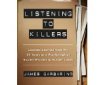
Join me for an “on the air” interview with Jim on the VoiceAmerica Empowerment Internet Radio network [click to listen]: A Rumor of Empathy in Listening to Killers – with replay available shortly after April 22nd. James Garbarino presents lessons… Read More ›
Join me for an engaging, live “on the air conversation” with David Howe, author of Empathy: What it is and why it matters. David Howe begins with the idea that empathy humanizes people and their relationships. Empathy is about our shared… Read More ›
Here is the short version of the short version: The deep, underground history of empathy is surfaced and reconstructed in Hume, Kant, Lipps, Freud, Scheler, Stein, and Husserl. A rumor of empathy is engaged in vicarious feeling, receptivity, empathic understanding, empathic interpretation, and… Read More ›
I have been talking with people in the community about what is “psychoanalysis.” The result? Many people no longer understand what is psychoanalysis – if they ever did understand it – or, even worse, have confused ideas about it. For… Read More ›
Here is a sixteen minute educational video produced and edited by yours truly featuring Serena Low, Executive Director of Apna Ghar (“Our Home”) which operates a shelter and crisis hot line for women in Chicago. She nets out a forty… Read More ›
This educational video includes a presentation by Lou Agosta on Heidegger’s call for a special hermeneutic of empathy in Heidegger’s book Being and Time. The different aspects of such a Heideggerian inquiry into and definition of empathy are spelled out… Read More ›
“Mud and Squalor” is the nickname of the US Army Air Corps base out of which in 1943 David James and his mentor, Carroll Langston, flew P-51 single engine, pursuit aircraft during World War II. Mr. James talks about his… Read More ›
This is an on camera interview with Serena Low, Executive Director, Apna Ghar (“Our Home”), captured on December 13, 2012. Apna Ghar (“Our Home”) operates a Hot Line and Shelter for women who are dealing with domestic abuse, intimate partner… Read More ›
In BEING AND TIME, Heidegger famously notes that the analysis of the affects (pathe) has taken barely one step forward since book II of Aristotle’s RHETORIC (H139). This Hot Link is an essay on this subject published in Philosophy Today… Read More ›
I am humbled by the comments of my colleagues, friends, and associates. “An insightful and provocative exploration of a topic that has only recently begun to receive the attention it deserves and the conceptual clarity needed for a proper understanding…. Read More ›
This is Part Two of the series on how empathy relates to reducing stress as a “spa treatment for the soul.” In order to understand empathy as a kind of antidote to stress, it is important to know the enemy… Read More ›
My first training in stress reduction through empathy came from my dear Grandma Laura. With Grandma Laura the force of empathy was strong. However, she came from a time and place, prior to the Internet, that did not require much… Read More ›
To listen to Edwin’s Rutsch’s interview and conversation with Lou Agosta on Sept 1, 2026. Play interview by clicking here: Edwin Rutsch Interviews Lou Agosta [ https://youtu.be/4jQe9ccVfM8?si=lwVibcPIN8D67v3w%5D The following summary was generated by AI by Edwin Rutsch (and Lou). Edwin… Read More ›
Empathy Lessons Training Seminar (ELTS) Empathy is oxygen for the soul. Short of breath? Maybe one needs expanded empathy. Get some empathy and expand yours in this seminar. A rigorous and critical empathy says: I know what you feel because… Read More ›
As an exercise, consider that the other person is one’s empathy trainer. The other individual calls forth one’s empathy. If the Other behaves in a challenging way, the challenge is to one’s empathy. If the other person is in an… Read More ›
But if empathy still sells, its limitations sell even better. The latest trend is to denounce empathy as a weakness and a danger to western civilization. What’s with that? How to answer the anti-empathy critics aidrectly and powerfully. Find out here.
The distinction between Hard Empathy and Soft Empathy needs to be better known. Soft empathy does not work with bullies, psychopaths, and the criminally insane; which are difficult individuals where Hard Empathy can make a difference. The innovation proposed here is to think of empathy, like so many things these days, as existing on a spectrum between empathy as “empathic listening” and empathy as “tough love.” A rigorous and critical empathy includes both options, which map to the difference between “soft empathy” and “hard empathy,” and a sliding scale of possibilities in-between.
Suicidal empathy is back in the news and deserves to be put in its proper place. Empathy exists on a spectrum between empathic kindness and “tough love”. This post contains some of each—but mostly tough love—for the anti-empathy skeptics. The… Read More ›