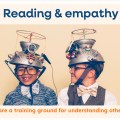
This episode on Radical Empathy – what it is and why it is important – is the first in a series inquiring into radical empathy, what it is or whether it is just a rumor; how radical empathy differs from standard empathy; how radical empathy and everyday, standard empathy overlap and the dynamics of their interactions; how radical empathy makes a difference in situations when standard empathy breaks down and fails; and how the listener can expand his or her empathic skills, getting power over empathy and apply empathy in one’s lie, relationships, career, family, in the individual and in community.
talk therapy
Therapy’s not gonna fix this, and it just might help you get unglued from your doom scrolling and into action: empathic defects, unelected puppet masters, and the uncontrolled burn
That little voice inside that is quietly telling you “You do not make a difference” is not your friend. It must be the first target of transformation – High probability that voice is a hostile introject based on whatever it is that you had to survive
Cruelty in politics and unelected puppet masters
Whereas some leaders try to balance power with compassion, the current leadership often portrays empathy as a flaw. Strength, in his view, is about domination—whether over political rivals, foreign adversaries, or marginalized groups.
Henry James’ Depiction of Unreliable Parental Empathy in “What Maisie Knew”
James’ incomparable empathy with Maisie and his penetrating and astute comprehension of human relations writ large applies empathy in the extended sense to who people are as possibilities, walking in the other’s shoes (after, of course, first taking off one’s own to avoid projection), translating communications between adults and children (and adults and adults) as well as affect-matching and mis-matching (empathy in the narrow sense).
How I Changed My Relationship to Pain
Expanded power over pain is a significant result that may usefully be embraced by all human beings who experience pain – which describes just about everyone at some time or another. Acute pain communicates an urgent need for intervention; chronic pain is demoralizing and potentially life changing.
Empathy is hard in the patriarchy
So far, the two-ton elephant in the room is “Maybe men and women really do have different brains – or a combination of brains and early experiences that produce different results from the same input.” Note this applies either in… Read More ›
Summer Reading: The Song of Our Scars by Haider Warraich
To course-correct our approach to pain, we need to change the story of chronic pain – pushing back on the voices attempting to convince us all pain is catastrophic and life threatening and needs immediate attention over everything else right now – but yet – pain is world consuming
Review: Empathy, Embodiment, and the Person: Husserlian Investigations of Social Experience and the Self by James Jardine
Okay – the photo is kinda scary, but he is a really kind man. Will empathy solve the problem? Husserl himself withheld the manuscript of Ideas II from publication. He was not satisfied with the results, having been accused of succumbing to the problematic philosophical dead-end of solipsism, the inability to escape from the isolated self, knowing only itself.
Review: How to think more about Sex by Alain de Botton
De Botton is absolutely on point in asserting that neither sex nor love should require us to lie in order to get them. Definitely tell the truth – including to yourself. Yet the way sex and love (affection) fall apart is concerning. How does when bring them together? See http://www.EmpathyLessons.com
Revolution of the Ordinary by Toril Moi (Reviewed)
Moi’s book uses Wittgenstein as a path to reading literature, asserting, like Wittgenstein, that “nothing is hidden.” It turns out that quite a lot is “hidden in plain view.” The “hermetic of suspicion” is roundly critiqued by Moi, but, I assert, in way uncharitably. Find out the details.