the word itself in English “empathy” was not invented until a Cornell University psychologist, Edward Bradford Titchner, was translating (1895) one of the innovators who are credited with founding psychology as a science, namely, Wilhelm Wundt – and Titchener invented the word “empathy” to translate the German “Einfühlung”.
empathic receptivity
Empathy on Bastille Day
When one experiences the lack of empathy as a boundary issue or even a boundary violation, including a dignity violation, then the response is narcissistic rage in an attempt to get back one’s own and re-establish the boundary. I suggest this is a primitive, primary process response that is rarely well thought out or even all that adaptive – except perhaps in a context of self-defense against an immediate danger – but it is a common response. This does not jive with the average everyday understanding of empathy but it is the heart of the matter: wherever there is empathy – can narcissistic rage be far behind?
Empathy Triple Play: 3 books on empathy: hear about the book that got me thrown out of the local institute for psychoanalysis
Empathy is oxygen for the soul. Short of breath? Maybe one needs expanded empathy. Get some – along with a light snack – at this event.
4 Ways Empathy Misfires, Breaks Down, Goes Astray – Don’t Let This Happen to You!
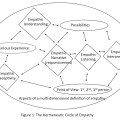
Four dimensions of empathy exist – each one has a way of misfiring, breaking down or going astray. The advantage of this definition of empathy is that it shows one where things go “off the rails”. If one knows where and how… Read More ›
Update: Hume on SYMPATHY and EMPATHY
HumeOnSympathyEmpathy (Article): There is a long history in British empiricist philosophy that engages “sympathy.” There are at least four meanings of “sympathy” in the writings of David Hume, dating to his a Treatise on Human Nature (1739). Hume has at least four distinct… Read More ›