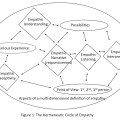
empathic responsiveness

Empathy as presence – online and in shared physical space

The ontological definition of empathy as “being in the presence of another human being without anything else added” – anything else such as judgment, evaluation, memory, desire, hostility, and the many factors that make us unavailable to be in relationship. Though Gillian Isaacs Russell uses the word “empathy” in a specific psychological sense, I would argue that her work on “presence” is consistent with and contributes to an enlarged sense of empathic relatedness that builds community.   

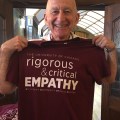
Perform a Readiness Assessment: A Rigorous and Critical Empathy

Empathy is never needed more than when it seems there is no time for it. Empathy is never needed more than when it seems the budget does not allow for it. Empathy is never needed more than when the cynicism and resignation about life, whether in the family or the corporate jungle, are so thick you can’t catch your breath.

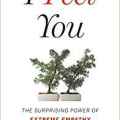
Review: Extreme Empathy [I Feel You: The Surprising Power of Extreme Empathy by Cris Beam]

Beam is a would-be “bad girl,” who has written a very good book. In a world of constrained, limited empathy, the empathic person is a non-conformist. Beam is one of those, too, and succeeds in sustaining a nuanced skepticism about the alternating hype and over-valuation of empathy over against those who summarily dismiss it. Most ambivalently, she calls out the corporate infatuation with empathy. I paraphrase the corporate approach: Take a walk in the other person’s shoes in order to sell them another pair.

Empathy at Grand Rounds – the movie (educational video)

the word itself in English “empathy” was not invented until a Cornell University psychologist, Edward Bradford Titchner, was translating (1895) one of the innovators who are credited with founding psychology as a science, namely, Wilhelm Wundt – and Titchener invented the word “empathy” to translate the German “Einfühlung”.