“Beloved” is the name of a person. Toni Morrison builds on the true story of Margaret Garner, an enslaved person, who escaped with her two children even while pregnant with a third, succeeding in reaching freedom across the Ohio River in 1854. However, shortly thereafter, slave catchers (“bounty hunters”) arrived with the local sheriff under the so-called fugitive slave act to return Margaret and her children to slavery. Rather than submit to re-enslavement, Margaret tried to kill the children, also planning then to kill herself. She succeeded in killing one, before being overpowered. The dead returns as a ghost – Beloved.

historical empathy
The varieties of empathy in Richard Wright’s Native Son
Until Bigger Thomas (BT) committed the first murder, he was little different than the biblical Cain before he slew Abel. Human history begins at the point at which that murder, born of envy, occurs. The murder creates agency. Likewise with BT:
Historical empathy, strict construction of the US Constitution – and guns
Whatever the Founding Fathers intended with the Second Amendment, they did NOT intend: Sandy Hook. They did not intend Nashville, Covenant School. They did not intend Uvalde, Parkland, Columbine, Buffalo, NY, Tops Friendly. They did not intend some 119 school shootings and counting since 2018.
On Guns: Historical Empathy and Strict Constructionism of the US Constitution
Whatever the Founding Fathers intended with the Second Amendment, they did NOT intend: Sandy Hook. They did not intend Uvale, Columbine, Buffalo, NY, Tops Friendly. They did not intend wiping out a 4th grade class using automatic weapon(s).
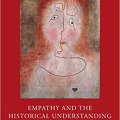
Review: Empathy and the Historical Understanding of the Human Past by Thomas A. Kohut
Kohut’s definition of empathy is a rigorous and critical one. Empathy is a mode of observation that gives one access to the thoughts and feelings of other human beings as subjects. Key term: subjectivity. Empathy is the foundation of intersubjectivity and that intersubjectivity has a temporal horizon extending from the past into the future.
Noted in Passing: George Steiner, author, After Babel, on translation, the Bible story, and empathy
George Steiner passed away in the fullness of time at his home in Cambridge, England, at the age of 90. This blog post acknowledges and honors him for his contribution, largely previously unnoted, to the understanding and practice of empathy…. Read More ›
Historical Empathy and the 2nd Amendment: About Guns
Putting ourselves in the situation of people who lived years ago in a different historical place and time is a challenge to our empathy. It requires historical empathy. How do we get “our heads around” a world that was fundamentally… Read More ›
Historical Empathy and Strict Constructionism: About Guns
When the framers of the US Constitution wrote the Second Amendment, the standard weapon was a single shot musket, powder and ball. This time out I am a strict constructionist.