Author Archives

Dedicated and committed that empathy becomes less of a rumor and more of an expanded reality in the community...
-
Listening to Killers by James Garbarino – An Interview with Lou Agosta

Originally posted on Empathy Lessons:
Join me for an “on the air” interview with Jim on the VoiceAmerica Empowerment Internet Radio network [click to listen]: A Rumor of Empathy in Listening to Killers – with replay available shortly after April… -
Anger and Forgiveness: Resentment, Generosity, and Justice, reviewed

Martha Nussbaum makes a strong case that, in the face of anger and wrong doing motivated by anger, forgiveness is over-rated. I repeat: over-rated. Instead Nussbaum suggests that generosity – especially when it is performed from strength – is a bridge from the negative consequences of reactive emotions such as anger and resentment to justice.
-
The “Good Parts” – Freud’s Engagement With the Issue of Intimacy and Sex

The reader arrives at the “good parts.” One is bound to be impressed by just how modern is the challenge with which Freud engages, namely, the distinction between intimacy and sex. Without revealing anything confidential, one can still register for training and development seminars with titles similar to “intimacy and sex,” precisely because people are still grappling with the problem. Find out how the conversation got started here.
-
Freud’s innovations in his essay “Infantile Sexuality”

Freud’s innovations in his essay “Infantile Sexuality” (1905) transformed our understanding of human development. They changed our way of thinking about and engaging with human relations so that we can never go back. In particular, Erik Erikson (1950/1963) and Anna… Read More ›
-
So Ancient, It is Modern: Freud’s Approach to Sexuality

The key point on which Freud’s argument turns and which is responsible for the surprising results that shocked Freud’s contemporaries is the distinction between the aim, the sexual drive (or instinct (“Trieb”)) and the sexual object. We shall have to work with this; but basically the drive or instinct aims at satisfaction. The sexual object is highly variable and different objects are relatively readily substitutable for one another.
-
Resistance to Empathy in the Organization

Ours is the age of compliance. There are so many “shoulds” – so many rules – that doing one’s job is a challenge. Resistance to empathy is subtle, and it deploys institutional mechanisms, usually unwittingly, to disrupt empathy. The psychosocial dimension complicates resistance to empathy on the part of “behavioral health” professionals.
-
Wittgenstein, Schreber, the Schizophrenic Mind, and the Paradoxes of Delusion, reviewed
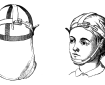
Sass provides a compelling account of how philosophical solipsism, idealism, and phenomenalism (not phenomenology!) gives us access to the experiences of schizophrenic individuals and provide the disorder with its characteristic aspects.
-
Empathy: A Model Interdisciplinary Curriculum
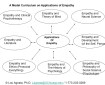
Empathy is oxygen for the soul – for teachers and students, here is a model curriculum for empathy studies in diverse contexts.
-
The Last Psychoanalyst: Review of Arnold Goldberg’s The Brain, the Mind, and the Self: A Psychoanalytic Roadmap

It is not the purpose of this engaging and thought provoking book to get the reader to feel comfortable; it is the purpose of this book to get the reader to think – about psychoanalysis.
-
Empathy Triple Play: 3 books on empathy: hear about the book that got me thrown out of the local institute for psychoanalysis

Empathy is oxygen for the soul. Short of breath? Maybe one needs expanded empathy. Get some – along with a light snack – at this event.
 Empathy Lessons